
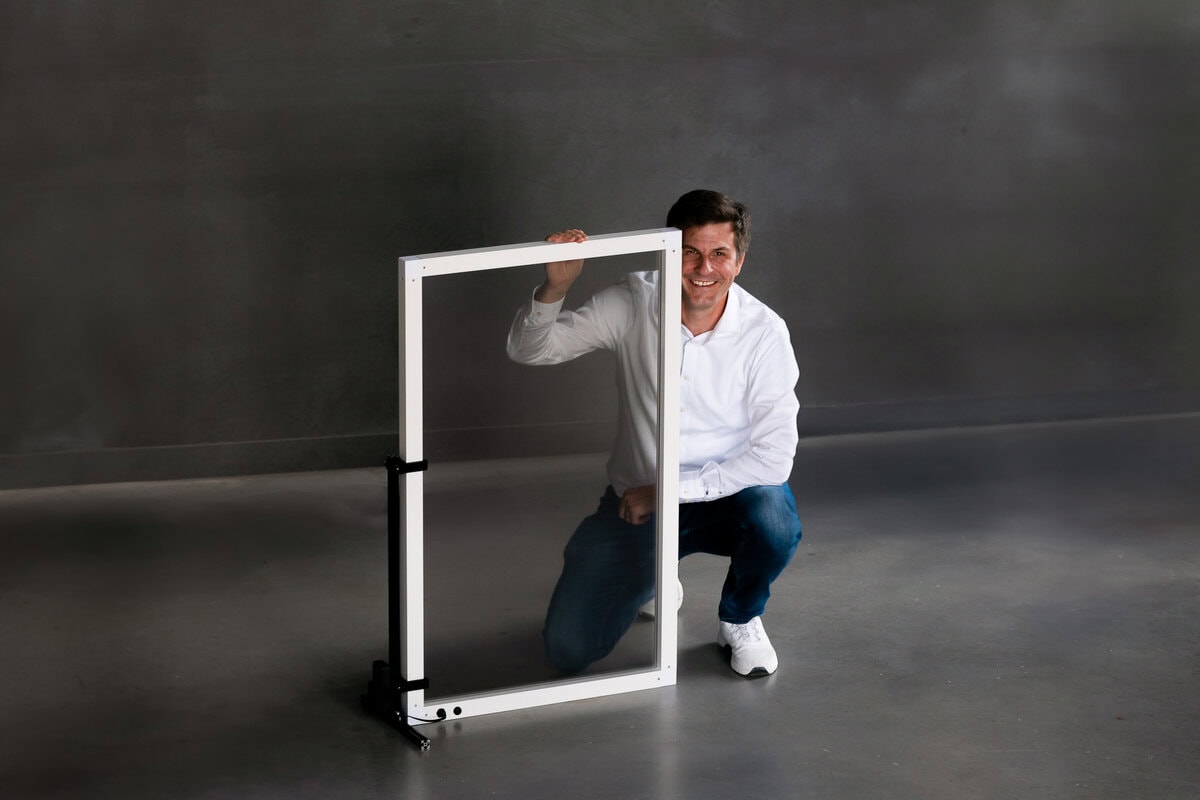
Smart Glass vs. Curtains and Blinds for Homeowners
Three Different Ways to Manage Light at Home
Curtains, blinds, and smart glass all do the same basic job: control how much light, heat, and privacy comes through a window. But they get there differently, and for a homeowner, the differences show up in daily life more than in a spec sheet.
Curtains are fabric, chosen as much for how a room looks and feels as for function. Blinds use slats that tilt or raise to adjust light in steps. Smart glass changes the tint of the glazing itself, using ELM (Electrophoretic Light Modulation) technology in eLstar Dynamics’s case, so there’s no fabric or slat involved at all.
Keeping the House Comfortable Year-Round
Curtains do more for a home’s comfort than most people realize. The US Department of Energy estimates that medium-weight draperies with a reflective backing can cut winter heat loss through a window by around a third, while also reducing summer solar heat gain by a similar margin.
The catch is fit. That performance depends on the curtain sealing tightly against the window frame, with no gap for air to move around the edges. A beautiful curtain hung loosely for the look of it delivers a fraction of the insulating benefit a well-fitted one does.
Smart glass doesn’t have that fit problem, because there’s no separate layer to hang correctly. The glazing itself manages solar heat gain, consistently, regardless of how it’s decorated or dressed on the inside.
What It Costs Per Room
Curtains and blinds are the lower-upfront-cost option, and that’s part of why they remain the default in most homes. But costs don’t stop at installation: fabric fades and needs replacing, cords and mechanisms wear out on blinds, and multi-room houses multiply that cost across every window.
Smart glass carries a higher upfront cost since it’s built into the glazing itself, but there’s no fabric to replace or mechanism to service room by room. The right choice often comes down to how long you plan to stay in the home and how many windows are involved, a full-house retrofit is a different decision than upgrading one south-facing living room window.
Family Life: Kids, Pets, and Everyday Wear
Corded blinds are a recognized safety concern in homes with young children or pets, which is why cordless blind options exist and are increasingly recommended for family homes. Smart glass sidesteps this entirely, there’s no cord, no slat mechanism, and nothing dangling within reach of a curious toddler or a cat that likes to climb.
Everyday wear matters too. Curtains collect dust and need regular washing. Blind slats can bend or jam with repeated handling, especially in a busy household. Smart glass has no moving parts on the inside of the home to bend, jam, or fray.
Integrating with a Connected Home
Both motorized blinds and smart glass can connect to a home automation system, tied to a schedule, a light sensor, or a voice command. The difference is what’s actually being automated. A motorized blind still has a motor, a track, and fabric or slats that can wear out or jam over years of daily cycles. Smart glass automates the glazing directly, with fewer physical parts to fail as the system ages.
Everyday Aesthetics
Because smart glass tints the glass itself rather than covering it, windows keep their full sightline and the room keeps its natural light even when the glazing is at its darkest setting. That matters most in homes where the view, or the window itself, is part of the design, a picture window, a garden view, an architectural feature the owner doesn’t want hidden behind fabric most of the day.
Curtains and blinds remain the better choice where the goal is a specific decorative look, or where full blackout is genuinely needed in a particular room.
FAQ
Can I use curtains and smart glass together? Yes, and many homeowners do. Smart glass handles everyday glare and heat management, while a curtain or blackout shade stays available for rooms that occasionally need to go fully dark, like a bedroom or home theater.
Do I need special wiring to add smart glass to my home? Smart glass requires a low-voltage electrical connection at the glazing, which is different from the wiring a standard window needs. This is usually planned during a renovation or new build rather than added to existing windows without any construction work.
Is smart glass safe for homes with young children or pets? Yes. Since there’s no cord or slat mechanism, it removes one of the recognized safety hazards associated with corded window coverings in homes with small children or pets.
Does smart glass provide full blackout for bedrooms? Not on its own. Smart glass reduces light significantly at its darkest tint state but isn’t designed for complete blackout the way a dedicated blackout curtain is. Bedrooms with strict blackout needs typically still use one alongside smart glass.
See What Fits Your Home
Curious whether smart glass makes sense for your house? Visit our Homeowners page to see residential applications, or our Technology page for more on how ELM works. For a broader comparison covering commercial and public spaces, see how smart glass compares to blinds and shades in more general terms.