
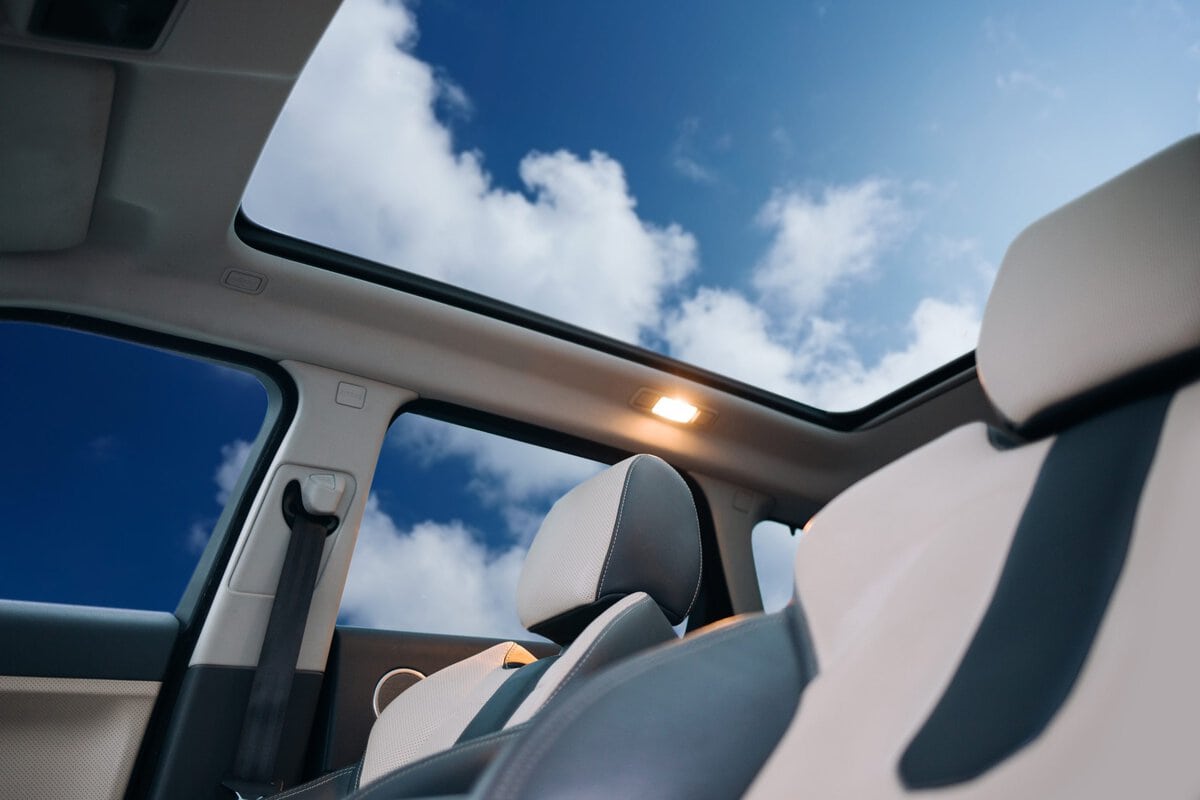
How Dynamic Glazing Supports Autonomous Vehicle Interior Design
Why AV Interiors Are Being Redesigned From the Ground Up
Once a driver no longer needs to watch the road, a cabin stops being built around the driving task. Interior designers are already reworking layouts around this shift: seats that swivel or recline into a conversation area, personalized climate zones for individual passengers, and cabin electronics that track what’s happening around the vehicle rather than assuming a driver is doing that job. Suppliers like Lear describe this as a move toward a “cocoon,” a personalized micro-environment for each occupant rather than a single, driver-oriented seating arrangement.
That shift changes what glazing needs to do. A window’s job used to be simple: let the driver see out, and let enough light in to be comfortable. In a reconfigurable, lounge-like cabin, glazing has to support several different uses of the same space over a single trip.
The Privacy Problem Autonomous Cabins Create
Removing the driver changes the relationship between a vehicle’s occupants and the people outside it. Patent filings on this exact problem note that autonomous vehicles tend to carry more expensive interior components, displays, audio-video systems, and comfortable furnishings, and that this can draw more attention from pedestrians who want to look inside. At the same time, passengers who are working, resting, or on a call no longer have a driver’s presence discouraging that kind of outside attention.
That’s a genuinely different privacy problem than a conventional car has. A driver glances out constantly and expects to be seen doing so. An AV passenger stopped at a curb, waiting for a pickup, or reclined for a nap, doesn’t have that same implicit visibility trade-off, and increasingly wants some control over it.
Where Fixed Tint and Mechanical Shades Fall Short
Static tinted glass picks one privacy level and keeps it for the life of the vehicle, which doesn’t match a cabin that’s a workspace one moment and a rest space the next. Mechanical shades can adjust, but they add moving parts, weight, and another maintenance point, a real consideration for shared or fleet vehicles that see far more daily use cycles than a privately owned car.
There’s also a timing problem specific to autonomous operation. A vehicle needs full visibility during boarding, alighting, and certain safety-relevant moments, then can reasonably offer more privacy once underway or parked and waiting. A fixed tint level can’t make that distinction; a mechanical shade needs someone to operate it.
How Dynamic Glazing Fits the Redesigned Cabin
Dynamic glazing, glass that changes its own light transmission electronically, closes that gap. Rather than a passenger or driver deciding to lower a shade, the glazing can shift automatically at specific moments: full visibility during a pickup or drop-off, more privacy once the vehicle is moving and a passenger has settled into a workspace or rest configuration.
ELM (Electrophoretic Light Modulation), eLstar Dynamics’ dynamic glazing technology, is built around exactly this kind of automated, electronically controlled tint change rather than a mechanical one. It fits naturally alongside the personalized seating and climate zones already appearing in AV concept interiors, since it’s controlled the same way those systems are: by the vehicle’s own electronics, without asking a passenger to manage a physical shade.
There’s also a packaging benefit. A mechanical sunshade needs space to retract into, which in a sunroof or panoramic roof typically comes out of cabin headroom. Replacing the shade with dynamic glazing removes that mechanism, which can free up to 5 cm of headroom, a meaningful gain in a cabin where seating is meant to recline and rotate rather than sit upright.
Regulatory and Safety Considerations
Any glazing solution used near the windshield or primary forward field of view still has to meet minimum visibility standards, in the US, FMVSS 205 governs glazing materials and light transmission, alongside UN ECE R43 internationally. Dynamic glazing on side glass has more flexibility than glazing in the driver’s or sensor’s direct field of view, which is why current automotive applications for switchable glass concentrate on sunroofs, rear glass, and cabin partitions rather than the windshield itself.
FAQ
Can dynamic glazing be used on an AV’s windshield, or just side glass? Most current applications are on sunroofs, rear windows, and interior partitions rather than the windshield, since forward glazing has to meet strict, constant visibility requirements under standards like FMVSS 205 and UN ECE R43. Side and privacy glass have more room to vary transmission by the moment.
Does dynamic glazing interfere with an AV’s cameras or sensors? This depends on where the glazing sits relative to the vehicle’s sensor suite, and it’s a question original equipment manufacturers (OEMs) typically work through during integration rather than something with one universal answer. Sensor housings and forward-facing glazing are generally kept separate from tint-adjustable privacy glass for this reason.
Does dynamic glazing add weight compared to mechanical shades? It replaces a shade’s motor, track, and fabric with a thin layer built into the glazing itself, which tends to reduce added components rather than increase them, and removes the space the shade mechanism needs, up to 5 cm of headroom. The exact weight comparison depends on the specific shade system being replaced.
Will passengers control the tint themselves, or is it automated? Both are possible. The glazing can be set to shift automatically at defined points in a trip, or left under manual passenger control, depending on how an OEM wants to design the experience.
Talk to eLstar Dynamics About Your Program
If you’re designing an autonomous or shared-mobility interior and want to see where dynamic glazing fits, get in touch with eLstar Dynamics, or visit our Technology page to see how ELM works, or our Automotive page for more on current automotive applications.